How to Use the API Water Test Kit (Freshwater & Marine): Full Step-by-Step Guide
By Melbourne Tropical Team · 6 min read
A complete, beginner-friendly guide to using the API liquid water test kit for freshwater and marine aquariums - every test explained step by step, with target ranges and a printable colour-reading guide.
The API liquid test kits (the Freshwater Master Test Kit and the Saltwater Master Test Kit) are the most popular way for Australian fishkeepers to check their water. Liquid kits are far more accurate and far cheaper per test than paper strips, so they are well worth learning. This guide walks you through every test, step by step, for both freshwater and marine tanks.
Why test your aquarium water?
You cannot see ammonia, nitrite or nitrate, yet they are the leading causes of fish illness and death. Testing turns the invisible into numbers you can act on - it tells you when a new tank has finished cycling, warns you of a problem before your fish get sick, and shows you when a water change is due. A test kit is the single most useful tool after your tank and filter.
The 5 basic steps (all liquid tests)
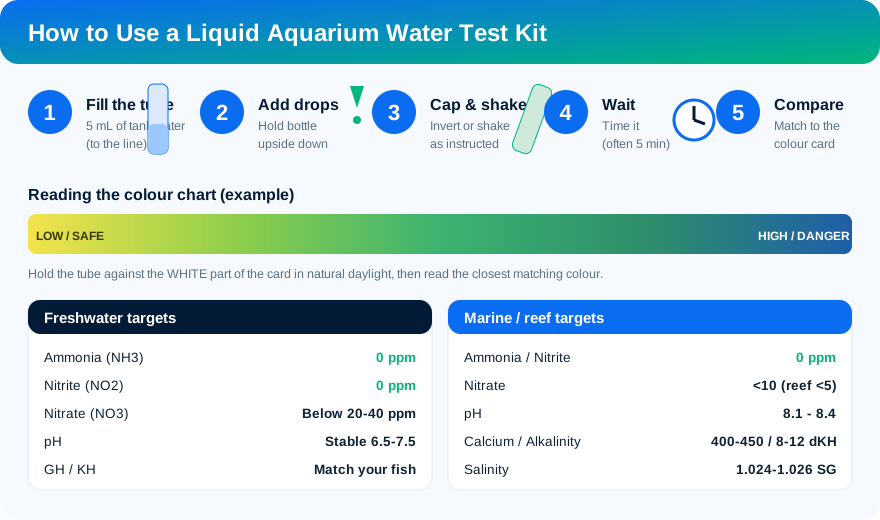
Every test in the kit follows the same pattern, shown in the diagram above:
- Fill the test tube with exactly 5 mL of aquarium water (to the line on the tube).
- Add the drops of the test reagent. Hold each bottle completely upside down so the drops are a consistent size, and count carefully.
- Cap and mix - invert or shake the tube as the test requires.
- Wait the required time (many tests need a full 5 minutes for the colour to develop).
- Compare the tube to the colour card, held against the white area in natural daylight, and read off the closest match.
Rinse the tube with tank water (not soap) before and after each test, and always replace the right caps on the right bottles.
Part 1: The API Freshwater Master Test Kit
This kit tests the four things that matter most in a freshwater tank - pH, ammonia, nitrite and nitrate - plus a high-range pH. Here is how to run each one.
pH test (and High Range pH)
Fill the tube to 5 mL. For the normal pH test, add 3 drops of the pH solution, cap and invert a few times, and read straight away against the pH card (it reads roughly 6.0 to 7.6). If your reading is at the very top of that range, run the High Range pH test instead: 5 drops into a fresh 5 mL sample, invert, and read against the high-range card (7.4 to 8.8). pH does not need a waiting time - read it immediately.
Ammonia test (NH3/NH4)
Ammonia uses two bottles. Fill the tube to 5 mL, add 8 drops from ammonia bottle #1, then 8 drops from bottle #2. Cap and shake the tube for about 5 seconds, then wait 5 minutes for the colour to develop before comparing it to the card. Bright yellow means zero (good); any green tells you ammonia is present and your fish are at risk.
Nitrite test (NO2)
Fill to 5 mL, add 5 drops of the nitrite solution, cap and shake, then wait 5 minutes. A clear sky-blue colour means zero; purple means nitrite is present, which is dangerous and usually appears in a tank that has not finished cycling.
Nitrate test (NO3) - the one most people get wrong
Nitrate is the fiddliest test, so follow it carefully. Fill to 5 mL and add 10 drops from nitrate bottle #1, then cap and invert a few times. Now the important bit: shake nitrate bottle #2 hard for at least 30 seconds before using it (the reagent settles and gives false low readings if you skip this). Add 10 drops of bottle #2, then cap and shake the test tube vigorously for a full 1 minute. Wait 5 minutes, then compare. Keep nitrate below about 20-40 ppm by doing regular water changes - our water change calculator shows how much to change.
Freshwater target ranges
For a healthy freshwater community tank, aim for: Ammonia 0 ppm, Nitrite 0 ppm, Nitrate below 20-40 ppm, and a stable pH that suits your fish (most community fish are happy anywhere from 6.5 to 7.5 as long as it does not swing around). If you are cycling a new tank, track your readings with our free aquarium cycling tracker - the tank is cycled when ammonia and nitrite both read zero and nitrate is present.
Part 2: The API Saltwater & Reef Test Kits (marine tanks)
The API Saltwater Master Test Kit tests high-range pH, ammonia, nitrite and nitrate, using the same drop-and-wait method as the freshwater kit. The ammonia, nitrite and nitrate procedures are essentially the same as above. The main differences for marine are the pH range and the much tighter target numbers.
Extra tests for reef tanks (API Reef Master Test Kit)
If you keep corals, you will also want the API Reef Master Test Kit, which adds the parameters corals depend on:
- Calcium - corals use it to build their skeletons; aim for about 400-450 ppm.
- Carbonate hardness (KH / Alkalinity) - the buffer that keeps pH stable; aim for about 8-12 dKH.
- Phosphate - high phosphate fuels algae and stunts corals; keep it very low (under ~0.03 ppm in a reef).
These tests involve titration (adding drops or powder until the colour changes, then counting) rather than a simple colour match - follow the kit's instructions closely and count carefully.
Marine / reef target ranges
For a marine tank, aim for: Ammonia 0, Nitrite 0, Nitrate below 10 ppm (below 5 ppm for a reef), pH 8.1-8.4, and a stable salinity of about 1.024-1.026 specific gravity (measured with a refractometer, not a test kit). Reef keepers also hold Calcium around 400-450 ppm and Alkalinity at 8-12 dKH. You can convert between hardness and salinity units with our water parameter converter.
Tips for accurate, consistent results
- Hold bottles vertically (upside down) so every drop is the same size - tilted bottles give big errors, especially on nitrate.
- Shake nitrate bottle #2 and the tube hard and for the full time - this is the number-one cause of falsely low nitrate readings.
- Read in natural daylight against the white part of the card; artificial light distorts the colours.
- Wait the full development time. Reading ammonia or nitrate too early gives a wrong, low result.
- Rinse tubes with tank water only - soap or detergent residue ruins tests.
- Check the expiry dates; old reagents (especially nitrate) drift and read low.
How often should you test?
Test daily while cycling a new tank, then weekly once it is established, and any time fish look unwell, after adding new fish, or after a problem like a dead fish or a power cut. Keeping a simple log helps you spot trends before they become emergencies.
Testing is the habit that separates thriving tanks from struggling ones. Pair it with regular water changes and you will prevent the large majority of fish health problems. For more, see our guides on cloudy water and common fish diseases.